Introduction:
Efficient production is crucial in manufacturing, and designing products with manufacturability in mind can make a significant difference. Computer-Aided Design (CAD) software has revolutionized product design, enabling engineers to create intricate designs with precision and ease. In this blog post, we’ll explore how designing for manufacturability using CAD design can streamline the production process, leading to cost savings, improved quality, and faster time-to-market.
Understanding Design for Manufacturability (DFM):
Design for Manufacturability (DFM) involves designing products with the goal of optimizing the manufacturing process, reducing production costs, and enhancing overall quality. Considering manufacturing constraints and requirements during the design phase is crucial to avoid costly redesigns and delays later in production.
The Role of CAD Design in DFM:
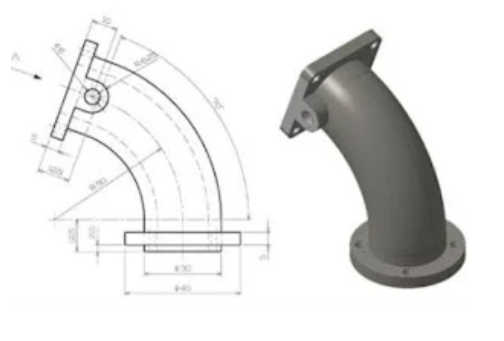
CAD software allows engineers to create detailed 2D and 3D digital models of product designs, enabling visualization and refinement before production. Key features such as parametric modeling and simulation tools help optimize designs for manufacturability.
Benefits of DFM in CAD Design:
Incorporating DFM principles into CAD design offers several benefits, including reduced production costs, improved product quality, and faster time-to-market. Real-world examples illustrate how DFM-driven CAD design enhances efficiency and competitiveness across industries.
Best Practices for DFM in CAD Design:
Best practices include designing with standard materials and components, simplifying part geometries, and considering manufacturing processes and constraints. Practical tips for incorporating DFM principles into CAD workflows, such as design reviews and collaboration with manufacturing teams, are provided.
The Future of DFM and CAD Design:
Emerging trends like generative design and additive manufacturing are shaping the future of DFM and CAD design. These advancements have the potential to revolutionize product development processes, manufacturing efficiency, and design innovation.
Conclusion:
Designing for manufacturability using CAD design is essential for optimizing production processes, reducing costs, and improving product quality. By embracing DFM principles and leveraging CAD software, manufacturers can unlock new possibilities in product design and manufacturing, driving innovation and competitiveness in their industries.



Leave a Reply